首页 关于 解决方案 联系我们

关于概念

为什么双模式很重要

基于研究的洞察,说明为什么最佳人工智能解决方案需要两种界面。

研究

数据告诉我们什么

Chatbots vs. Menu-Based Interfaces: The Surprising Truth

Nguyen, Sidorova & Torres (2021) — Computers in Human Behavior, Vol. 128, 107093

A landmark empirical study using Self-Determination Theory found that chatbot interfaces actually require MORE cognitive effort than menu-based interfaces and result in LOWER perceived autonomy and user satisfaction. Users felt less in control when forced to interact through natural language alone, contrary to industry assumptions. The study of 85+ participants across travel planning tasks revealed that cognitive effort had a strong negative effect on system satisfaction specifically when using chatbots — an effect not seen with traditional menu interfaces.

关键发现: Users don't universally prefer conversational interfaces. For structured tasks, traditional GUIs deliver higher satisfaction and lower mental workload.

AI Chatbots Deliver Better UX — But Not for Everyone

Applied Sciences (2025) — Comparative Study of ChatGPT, Gemini, and Traditional QDA Tools

A comprehensive evaluation using UEQ-S, NASA-TLX, and SUS instruments found that while AI chatbots (ChatGPT: SUS 79.03, Gemini: SUS 75.08) outperformed traditional tools (Taguette: SUS 74.95) in hedonic quality and positive emotional affect, the non-AI tool scored highest on performance trust. Users valued the perceived reliability and precision of the traditional interface for task-specific outcomes. AI tools reduced mental workload to the 20th percentile (lowest scores) while traditional tools placed in the 50-70th percentile — but users reported more frustration and negative emotions with the conventional tool.

关键发现: The optimal system isn't AI-only or traditional-only — it's a system that delivers the low cognitive load of AI with the trust and precision of structured interfaces.

The Multimodal Interface Dilemma

Stanford HAI / MAUI Architecture 研究 (2024)

研究 on multimodal AI interfaces reveals a fundamental challenge: each interaction mode offers distinct advantages but faces unique limitations. Text-based interaction offers high accessibility but moderate response accuracy. Voice-based systems provide dynamic interaction but face ambiguity challenges. Graphical UIs offer precision but lack the flexibility of natural language. The emerging consensus: hybrid approaches combining GUI simplicity with conversational versatility provide the most practical solution for enterprise deployment.

关键发现: A hybrid interface model — where users begin with text prompts, seamlessly transition to structured inputs, and receive contextual responses without switching contexts — delivers the highest user satisfaction scores.

Why 80% of Enterprise AI Projects Fail

McKinsey (2024), Deloitte (2023), IBM Think (2025) — Cross-Industry Analysis

Multiple industry analyses converge on a critical insight: 80% of AI projects fail not due to technology limitations, but due to UX and integration challenges. 62% of companies cite data governance obstacles, 54% lack attributes for relevant AI outputs, and 52% struggle with data quality. However, the human dimension is equally critical: 57% of workers are reluctant to use AI, only 44% have received AI training, and cultural resistance — fear of workflow changes without retraining — creates a 'cultural drag' that stalls even well-funded initiatives.

关键发现: Companies that deploy dual-interface systems — offering both AI-powered and traditional interaction paths — report 5-7x higher success rates in AI deployment.
我们的方法

由 Omnisenti AI 构建

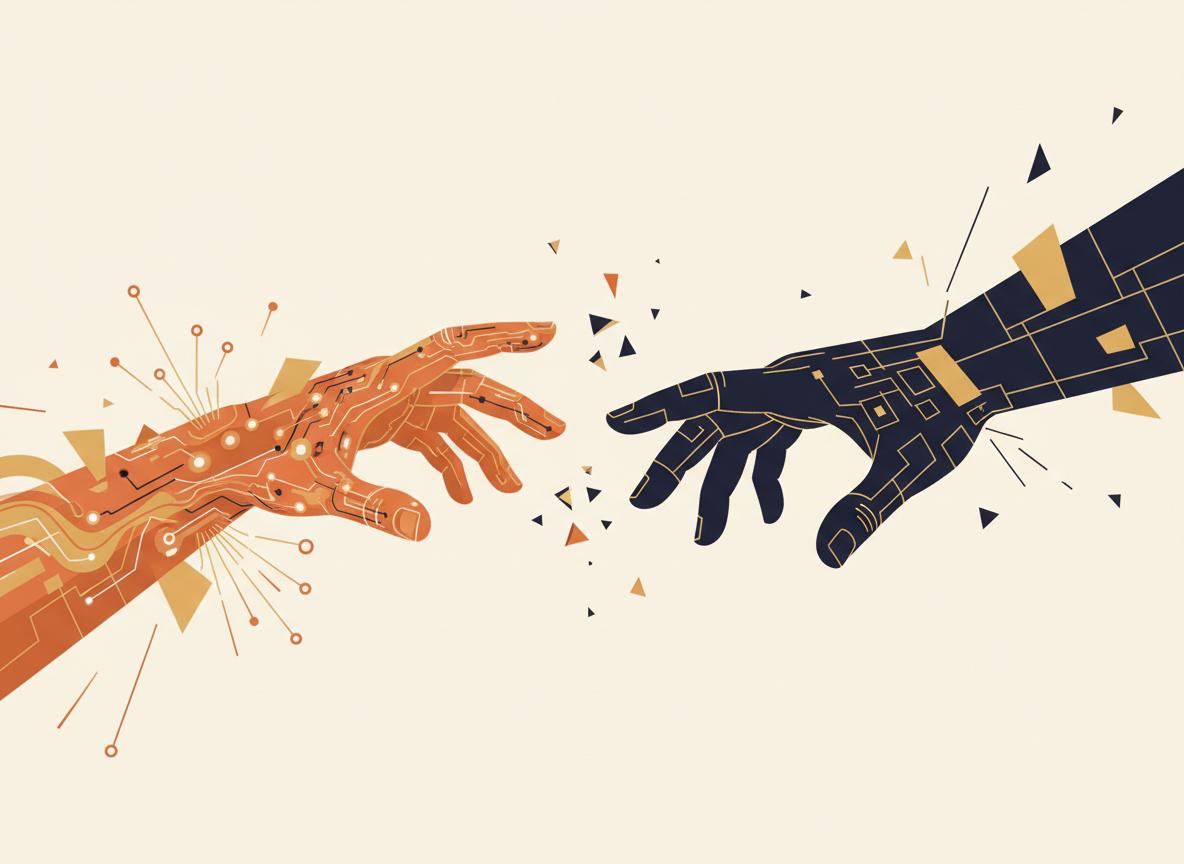
At Omnisenti AI , we believe the next generation of software must meet users where they are — not force them into a single interaction paradigm. Our Dual Mode AI framework enables enterprises to deploy LLM-powered solutions with a built-in conventional interface, ensuring every user can engage productively from day one.

我们不将人工智能和传统用户界面视为竞争者。我们将它们视为同一强大引擎的两个镜头。企业软件的未来不是仅有人工智能,而是人工智能加上传统界面。

Two hands reaching - digital and geometric